Roses Flower Font: A Decorative Typeface for Small Business Branding
Every small business owner knows that first impressions matter. Whether a customer sees your logo on a product label, scrolls past your Instagram post, or picks up a menu at your café, the visual identity you present shapes how they perceive your brand. One of the most effective yet often overlooked tools in building that identity is typography. The right typeface can convey personality, evoke emotion, and make your business look polished and trustworthy. That is exactly what Roses Flower brings to the table. This bold yet elegant decorative font blends romance with strength, making it a strong contender for any business owner who wants their brand to feel both approachable and refined.
What Makes Roses Flower Stand Out
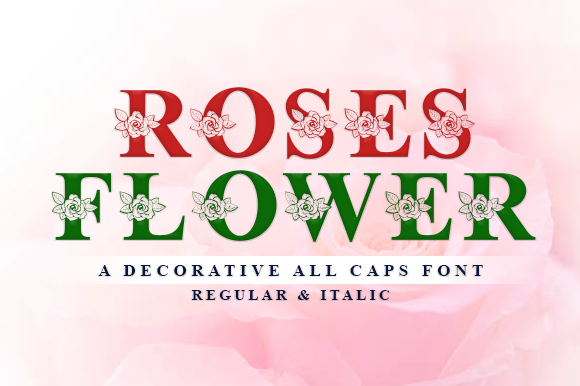
Roses Flower is not your typical everyday font. It sits comfortably in the decorative category, meaning it is designed to command attention and carry personality. The letterforms feel both expressive and graceful, with a romantic undercurrent that makes it ideal for brands that want to communicate warmth, care, and a touch of sophistication.
What I appreciate about this typeface is that it does not try to be subtle. It has a voice. When you use Roses Flower, you are telling your audience that your brand values beauty and attention to detail. At the same time, it remains readable and functional when used thoughtfully, a balance that is not always easy to find in decorative fonts.
The mood of this font leans romantic and lovely, but it carries enough structure to avoid feeling overly ornate or difficult to read. That makes it suitable for a range of real business applications rather than being confined to wedding invitations alone.
Where Roses Flower Fits in Your Brand Toolkit
As a small business owner, I am always looking for design assets that pull double duty. Roses Flower works well across several touchpoints, and understanding where to place it is key to getting the most value from the font.
Logos and Business Cards
A logo is often the first thing a customer remembers about your business. Using Roses Flower in your logo design can give your brand a distinctive, handcrafted feel. It works particularly well for businesses in the beauty, wedding, boutique, or food sectors. Imagine a candle company with a logo set in Roses Flower paired with a subtle monogram. Or a baking business using the font for its brand name on a cream-colored business card. The font brings a sense of care and artistry that standard sans serif typefaces cannot replicate.
Product Labels and Packaging Design
Packaging is your silent salesperson. When a customer picks up a product, the label needs to communicate quality in seconds. Roses Flower works beautifully as a display font on product labels. Use it for the product name, tagline, or a key ingredient callout. For a handmade soap or a jar of artisanal honey, this font adds a layer of elegance that suggests the product was made with intention.
I have personally seen small beauty brands transform their packaging simply by choosing a more expressive creative font for their product names. Roses Flower can do exactly that for your line.
Social Media Graphics and Digital Ads
Social media moves fast, and you only have a split second to stop a scroll. Using a distinctive display font like Roses Flower in your Instagram posts, Pinterest graphics, and digital ads can help your content stand out. Use it for headlines, quotes, or promotional text. Pair it with a clean, simple background so the font becomes the focal point.
For small business owners creating their own content, this font gives you an instant visual upgrade without needing advanced design skills. Just place your text, and the font does the heavy lifting.
Menus, Flyers, and Printed Materials
Cafés, bakeries, and boutique shops can use Roses Flower on menus, flyers, and in-store signage. A café menu that uses this font for section headers like "Coffee" or "Pastries" immediately feels more curated. Wedding planners and florists can use it on thank-you cards and pricing sheets. The key is to reserve it for short, impactful lines rather than large blocks of text.
Building a Consistent Brand Identity
Consistency is what separates a professional brand from a scattered one. When you commit to using Roses Flower across multiple materials, your customers start to recognize you. That recognition builds trust. If your logo uses this font, your product labels use it, and your social media graphics echo the same style, your brand feels cohesive.
I have found that having one or two signature fonts makes every design decision easier. You are not starting from scratch each time. You simply pull from your brand toolkit, and everything aligns. Roses Flower can become that anchor typeface for your business, especially if you operate in a romantic, feminine, or artisanal space.
When to Use Roses Flower as a Headline or Accent
Decorative fonts work best when they are used strategically. Roses Flower shines as a headline, logo, display font, or accent typeface. Reserve it for the most important words in your design, the name of your business, a product name, a key tagline, or a featured offer on a flyer.
Using it as a supporting typeface for body text is generally not recommended because readability can suffer at small sizes or in long paragraphs. Instead, let it lead the visual hierarchy and pair it with a neutral supporting font for everything else.
Readability Considerations for Real Business Use
One question I always ask before adopting a font is: will my customers actually be able to read it? Roses Flower performs well when used at medium to large sizes. On product labels, social media graphics, and signage, it remains clear and legible. However, on very small labels or mobile screens with tiny text, you should test it first.
Print a sample label at actual size. Look at a mockup on your phone. If the font feels crowded or unclear, scale it up or use it only for the most prominent words. This practical step saves you from investing in printed materials that are hard to read.
Testing Before You Commit
Before you roll Roses Flower out across your entire brand, take time to test it in context. Create a few mockups of your most common materials, a logo, a product label, an Instagram post, and a thank-you card. Show them to a friend or a trusted customer and ask what mood they associate with the font.
Testing helps you confirm that the font matches your brand personality. If you run a coaching business aimed at professionals, a romantic font might feel out of place. But if you sell wedding stationery or handmade gifts, it could be exactly right. Let your audience guide your final decision.
Simple Font Pairing Ideas
The best brands rarely use one font alone. Pairing Roses Flower with a clean, neutral typeface creates contrast and improves overall readability. Here are a few pairing approaches that work well in real business settings.
Pair with a clean sans serif font. A modern sans serif like a simple geometric typeface keeps your design grounded. Use the sans serif for body text, prices, descriptions, and contact details. Let Roses Flower take the headline role.
Pair with a readable serif font. A classic serif can complement the romantic feel of Roses Flower while offering better readability for longer text. This combination works well for menus, brochures, and websites where you need both elegance and function.
Pair with a simple script or handwritten font. If you want a more layered, artisanal look, combine Roses Flower with a subtler script. Just be careful not to overdo it. Two expressive fonts competing for attention can feel chaotic. Use one as the lead and the other sparingly.
Realistic Examples Across Different Businesses
Here is how Roses Flower might look in actual small business scenarios.
A bakery uses it for the shop name on the storefront, on cake boxes, and on Instagram posts featuring new pastries. Paired with a light sans serif for ingredient lists and pricing, the brand feels warm and handmade.
A handmade candle studio uses Roses Flower for candle names like "Lavender Bloom" or "Rose Petal." The font sits on cream labels with minimal artwork, letting the typography carry the elegance.
A beauty product line uses the font for product names on serum bottles and face cream jars. The contrast between the delicate font and the sleek packaging creates interest.
A wedding planner or florist uses Roses Flower on business cards, proposal packages, and thank-you notes. The font reinforces the romantic, detail-oriented nature of the service.
A boutique clothing shop uses it for sale signage and window displays. It signals that the store curates its offerings with care.
Checking Commercial Font Licensing
One practical detail that many small business owners overlook is licensing. Before you use Roses Flower on products, packaging, templates, merchandise, client work, or digital downloads, verify the commercial license terms. Some fonts require an extended license for specific uses like merchandise resale or digital products.
Checking the license upfront prevents legal headaches later. It also ensures that you are using the font ethically and supporting the designer who created it. Add this step to your design checklist every time you adopt a new typeface.
Making the Decision for Your Brand
Roses Flower offers a blend of boldness and elegance that is hard to find in standard system fonts. For small business owners who want to build a recognizable, trustworthy brand, investing in a premium font like this is a smart move. It gives your materials a consistent, professional look without requiring a full rebrand or a design degree.
Start small. Use it in one area of your business, a logo, a product line, or a social media template, and see how it feels. Let the font work for you, and adjust as you grow. With thoughtful placement and a solid pairing strategy, Roses Flower can become a defining element of your brand identity.